


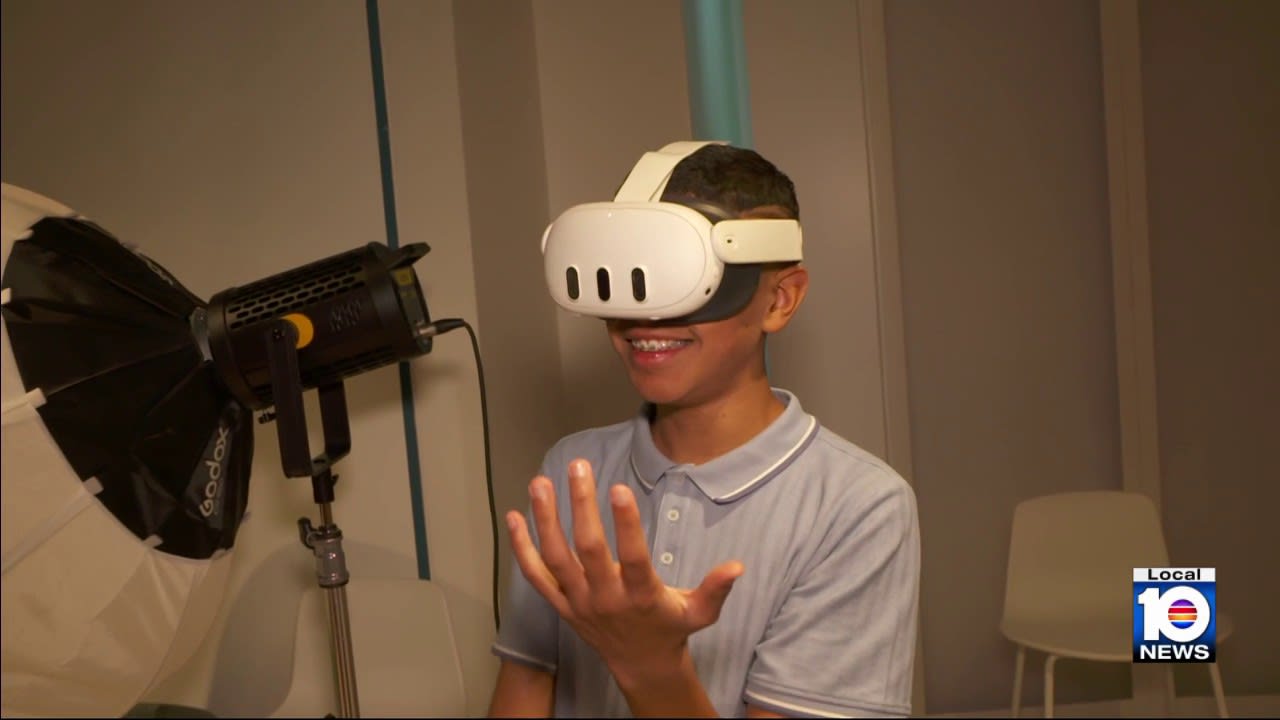
Nicklaus Children's Hospital in Miami, Florida has pioneered the use of virtual reality for pre-operative planning and intra-operative guidance in complex paediatric cardiac cases. Led by Dr. Shyam Sathanandam, the hospital's cardiology team used VR to build a three-dimensional model of a patient's heart defect, enabling the team to study the anatomy and rehearse the procedure before entering the catheterisation laboratory.
The approach was applied in the case of Matthew, a 12-year-old who was born with a congenital heart condition that went undetected until a routine physician visit. His mother, Yessenia Sierra, sought additional opinions before turning to Nicklaus Children's Hospital. The VR model gave Dr. Sathanandam and his team a detailed, spatially accurate view of the defect, informing both the procedural strategy and the precise placement of a graft to repair the abnormality.
Rather than proceeding with open-heart surgery — which would have been the conventional approach — the team performed a minimally invasive, catheter-based repair. There was no incision or suturing; the procedure was entirely endovascular. Matthew recovered within days and returned home quickly, later rejoining his baseball team.
According to a press release from Nicklaus Children's Heart Institute, the hospital is the first in Florida to use VR both before and during cardiac procedures, citing improved precision and accuracy. Dr. Sathanandam described the technology as akin to gaming technology applied to clinical medicine, enabling surgical rehearsal and real-time guidance that would not otherwise be possible.


