


Background
WWJ-TV (Channel 62), Paramount's CBS-owned television station in Detroit, branded CBS Detroit, put an augmented/virtual reality broadcast studio on air on Monday 20 April 2026. It is the 11th CBS-owned station to launch the group's AR/VR studio platform, which began at KPIX in San Francisco and moved into nightly production there in September 2023.
The Deployment
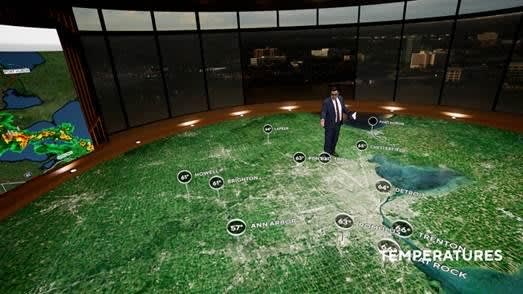
The studio premiered during WWJ-TV's 5 p.m. newscast, with chief meteorologist Ahmad Bajjey presenting a Next Weather forecast from inside a real-time 3D virtual environment the station calls the "NEXT Weathersphere". Weather is the launch application; CBS Detroit says it will extend AR/VR into morning newscasts, sports and other coverage later in summer 2026. Station manager Kennan Oliphant said WWJ-TV is the only station in the Detroit market using the technology.
Technology
The platform is standardised across CBS Television Stations and was developed in-house by the station group; no Detroit-specific source names the vendors. Trade coverage of the group rollout describes real-time 3D scenes rendered in Epic Games Unreal Engine and composited live by Zero Density's Reality Engine, with camera tracking from Stype and virtual set design and branding by Myreze. The graphics run over a large chroma key volume - a curved green screen that continues onto the floor, finished in ChromaLight paint - so camera moves stay perspective-correct and presenters can walk through the virtual set. Group coverage also names Chyron Prime graphics in the stack.
Context within the CBS rollout
CBS Television Stations has been rolling the platform out market by market since KPIX Bay Area originated it, with centralised technology support so software updates and operations can be shared across studios. Earlier launches named in trade coverage include KPIX San Francisco, New York, Philadelphia, Chicago, Denver, Miami, Dallas, Los Angeles and Atlanta.
Leadership
Jennifer A. Lyons, regional president and general manager of CBS Detroit and CBS Chicago, framed the studio as a way to make complex information clearer and more immersive. Station manager and vice president of news Kennan Oliphant called it "a big moment for Motown" and tied the investment to the market's record of innovation.


