

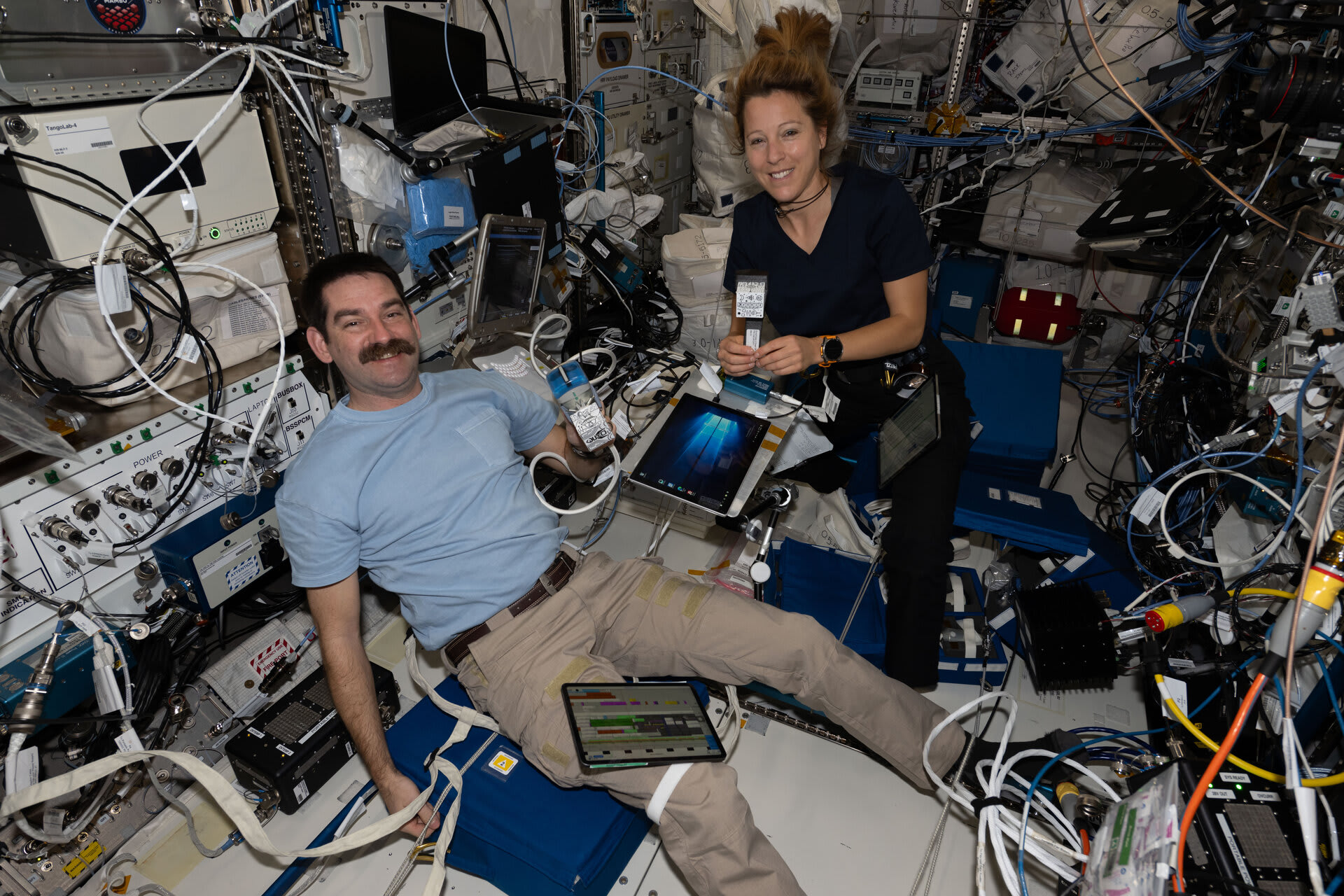
The EchoFinder experiment, part of ESA astronaut Sophie Adenot's epsilon mission aboard the International Space Station, is testing an augmented reality and AI-powered system designed to help non-specialist astronauts perform diagnostic ultrasound scans without requiring dedicated medical training.
Since February 14, 2026, Adenot and NASA astronaut Jack Hathaway have completed two sessions using the technology. The AR interface guides the operator by displaying visual overlays showing precisely where to position the ultrasound probe on the body. Once the probe is correctly placed, an AI system identifies the organs and records the resulting images, which can then be transmitted to medical teams on Earth for remote diagnosis — an important capability given the communication delays inherent in deep-space missions.
The experiment was developed with support from CNES and its CADMOS microgravity applications centre, which supports more than 25 scientific experiments annually. Beyond spaceflight, EchoFinder's developers see potential applications in remote terrestrial environments such as ships, submarines, and medically underserved regions, where specialist imaging expertise is similarly unavailable.


