


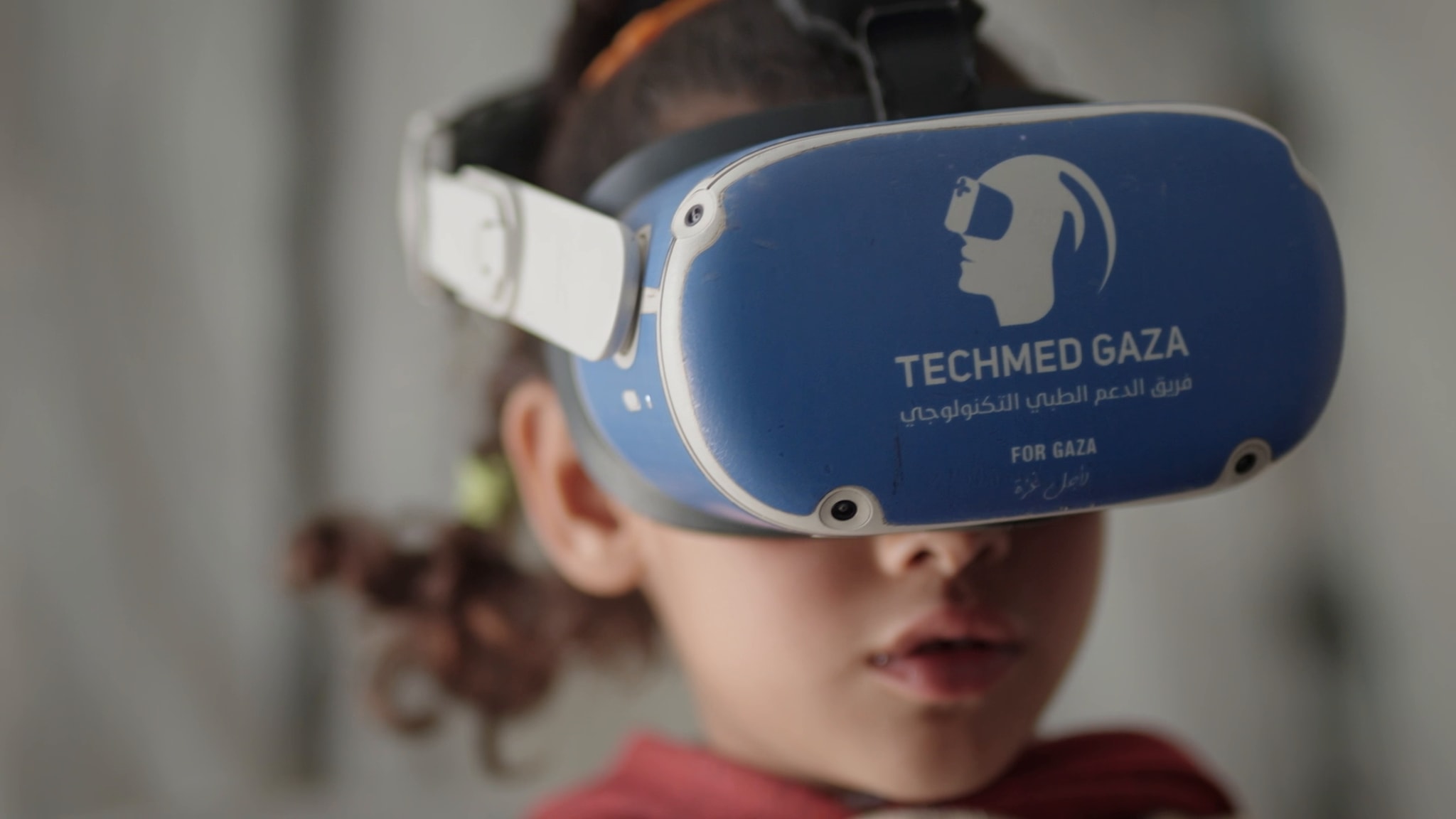
In the displacement camps of Gaza City, a small team from TechMed Gaza is using virtual reality headsets to provide psychological support to children living through the aftermath of conflict. Sessions begin with a therapist guiding a child through a calming virtual environment — animals roaming, fish swimming, cartoon characters moving through bright spaces. The contrast with Gaza's rubble and dust is deliberate.
The project started after a war-injured child presented with severe psychological symptoms: refusing to eat or drink, avoiding all contact, crying constantly. VR was introduced as a distraction and regulation tool, and the results were encouraging enough to expand the programme. To date, TechMed Gaza has worked with approximately 180 cases, combining structured in-headset sessions with breathing and walking exercises set in natural virtual environments.
One of the most striking outcomes described by staff member Lama Abu Dalal is children who had been unable to walk — not because of physical injury, but because of fear — taking their first steps while wearing the headset. Removing the visual context of destruction was enough to unlock movement the children were otherwise unable to perform.
Among those treated is seven-year-old Razan, who was struck by shrapnel while fetching water for her family. Following multiple surgeries — including one failed reconstruction — she stopped eating and drinking from shock, and still wakes from nightmares. Her mother, Rana Abu Harbid, describes slow but real progress. Two brothers, Ahmad (17) and Amjad (13), were both severely injured in an airstrike on their home. Ahmad lost sight in one eye; Amjad was briefly assumed dead before showing signs of life. Both report that the headsets offer brief but meaningful relief from the psychological weight of the war.
The programme faces significant practical constraints. Only a small number of headsets are available, and when hardware breaks, there are no replacement parts — border crossings remain closed to incoming equipment. Fewer working headsets means fewer children can be seen each week.


